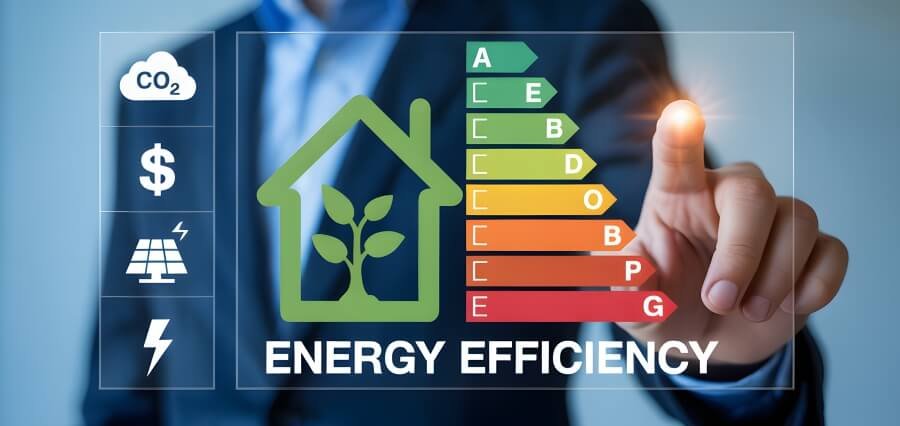
Inhabiting a world with intense rivalry, every organization wants to cut down its expenses, beautify its ecological footprint, and accelerate its performance. This is true for small startups just launching and for large, crowning enterprises. A widely effective approach that is, however, less often recognized is the energy efficiency of a business. It is far from being only a vogue.
The energy efficiency of a business has evolved into a long-term business strategy that directly affects the company’s profit, brand value, and contribution to the environment. Energy-efficient companies will make it to the front of the race with the rising of energy prices and the increasing demand of consumers for brands with a low carbon footprint.
Why Energy Efficiency Is Still More Significant Than Ever
The green global transition is something that the business world cannot avoid. Customers, investors, and governments demand businesses to be responsible and open. Corporate energy efficiency as part of a company’s CSR activities, besides that it lowers the utility costs, creates an effect that goes beyond the organization. Carbon emissions will go down together with energy consumption, thus, the business will abide by its sustainability pledge and will be in accordance with requirements.
Additionally, energy, efficient businesses are less prone to suffer operational setbacks. When systems such as lighting, heating, cooling, and machinery are at their peak performance, they require minimal maintenance, experience fewer breakdowns, and are more stable. This stability leads to higher productivity,consumption; which, in turn, enables management to concentrate on other business affairs, such as expansion, instead of constantly dealing with issues caused by obsolete equipment or inefficient infrastructure.
The Truth About Financial Consequences of Business Energy Efficiency
Quite a few business owners consider energy efficiency as an expensive and complicated endeavor. Nevertheless, the truth is just the reverse. Energy efficiency measures in the corporate sector are often the main contributors to the highest rates of return on investment when compared with other types of business investments.
Just modest changes, like transitioning to LED lighting, adding smart energy monitoring tools, or upgrading insulation, can lower the energy costs substantially over a period of time.
Major changes such as the installation of solar panels or the replacement of old machinery with high-efficiency models will result in long-term savings that will directly increase profit margins. What makes energy efficiency one of the wisest investments is its dual advantage: it lessens operational expenditure, and at the same time, it raises the value of company assets. High-energy, efficiently rated buildings attract better tenants, higher rents, and enhanced resale value. For customer-facing businesses, the financial benefits do not stop at the savings. Sustainability practice usually leads to enhanced customer trust and brand loyalty that results in increased revenue.
Additionally, there is a financial benefit through government incentives. Different areas may offer subsidies, tax credits, or rebates to businesses that invest in energy-saving technologies. These advantages ease the upfront cost and shorten the payback period, thus making the move to efficiency more attractive.
Technology: The Backbone of Modern Energy Efficiency
Technology is a major factor that changes the way organizations consume energy in the digital era. Smart metering systems provide real-time consumption data that enables businesses to pinpoint energy wastage fast and take corrective action instantly. Automated lighting systems, on the other hand, keep electricity consumption to a minimum by eliminating the periods when there is no need for lighting, and AI, powered heating and cooling units regulate temperatures depending on the number of people, weather, and time of day.
The advent of cloud-managed monitoring tools has greatly facilitated business energy efficiency to the point where it is now very accessible. Small businesses, for example, can track their energy performance without having to set up a large infrastructure. By implementing such solutions, companies can pinpoint inefficiencies that might be happening in their facilities, they can make decisions regarding upgrades based on the data collected, and they can even ensure that no energy goes to waste in their premises.
On the one hand, industrial facilities can benefit from energy-efficient motors, compressors, and production machinery that drastically lower their energy consumption. On the other hand, renewable energy sources like solar and wind provide cleaner and more stable alternatives to the traditional grid. Combined, these innovations give companies the power to lower their carbon footprint and eventually devise energy strategies that are not only affordable but also more secure.
Long-term efficiency, however, involves very little in the way of tools and technology and is mostly about people. Once employees are made to understand the importance of business energy efficiency, they will be willing to take up the role of co-drivers of green development in the organizational setting. Through communication and training methods, teams are equipped with the knowledge and skills necessary for them to demonstrate energy-savvy small behaviors like turning off equipment that is not in use, reporting inefficiencies, and supporting energy-efficient initiatives.
Internal awareness campaigns may result in employees coming up with new ideas for waste reduction. This employee involvement culture paves the way for a steady flow of improvement and thus ensures that the issue of energy efficiency is always present in the daily routine of the staff. Leadership or management is also instrumental in accomplishing such a transition. Support of energy goals by management, provision of the necessary budget, and public acknowledgement of efficiency accomplishments make not only the top management layer but also every other part of the organization more engaged in the change.
Also, a company with a strong culture of energy responsibility becomes more attractive to the company’s brand identity. Today, consumers prefer to buy from eco-friendly brands, and employees, as a trend, are willing to be employed by companies that care about the environment. Sharing your business’s energy efficiency success not only motivates the internal teams but also enhances the reputation outside.
The Way Forward: Business Energy Efficiency as a Source of
As the worldwide market changes, the companies that take the lead in optimizing their energy will have a strong competitive advantage. Such businesses will have low overheads, be financially resilient, and be less likely to face legal challenges. Furthermore, they are prepared for the coming changes in regulations and are in a position to meet the demands of customers who care about sustainability.
In the end, business energy efficiency should be seen as an ongoing journey rather than a one-off initiative. It entails the possession of certain qualities such as commitment, innovation, and readiness to change. On the other hand, the payoff—money saved, business stability, and a cleaner earth—are definitely worth the effort. If any business wants to be successful in the contemporary world, then investing in energy efficiency is one of the smartest decisions it can make.