Powering Quality
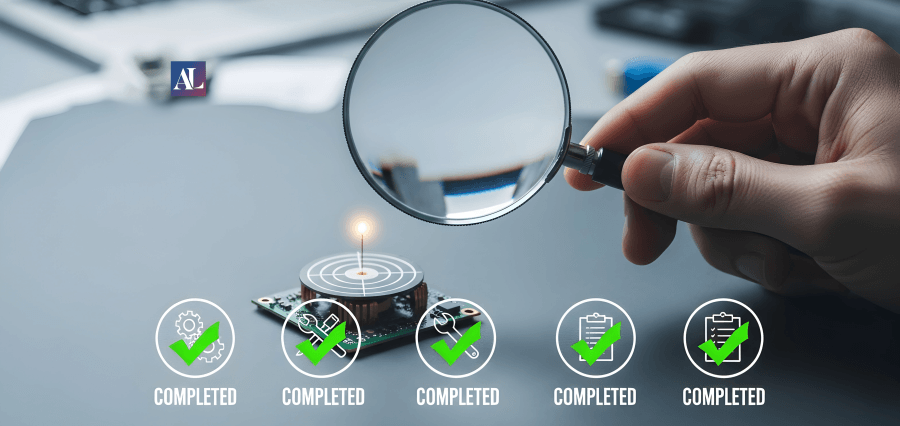
In manufacturing and industrial production, the difference between a product that works and one that fails can come down to measurements smaller than the human eye can detect. For decades, quality control depended heavily on manual inspection, skilled workers checking components by hand, using gauges and tools that required both training and considerable time. That approach served its purpose, but its limitations became harder to accept as production speeds increased and tolerance requirements grew tighter. Precision inspection technology has stepped into that space, changing not just how quality gets measured but how consistently and how quickly it can be guaranteed across entire production runs.
Science Behind Precision Inspection Technology
Strip away the technical language and precision inspection technology comes down to one thing: measurement. Capturing the exact dimensions, surface characteristics, and structural integrity of a component and comparing those measurements against what they are supposed to be. The gap between what something is and what it should be is where quality either holds or falls apart, and detecting that gap reliably and quickly is what separates an operation that genuinely controls quality from one that discovers problems only after they have already caused damage further down the line.
Modern inspection systems draw on optical, laser, and sensor-based approaches to gather measurement data with a level of accuracy that manual methods cannot replicate at scale. The science behind them pulls from optics, signal processing and computational analysis capable of interpreting measurement data faster and more consistently than a human inspector working under production pressure ever realistically could.
Balancing High-Speed Production with Precision
Traditional quality control carried a persistent tension between thoroughness and speed. Detailed manual inspection took time, and time was always competing with output targets. The result was usually a compromise sampling rather than inspecting everything, or accepting a margin of error that production pressure made unavoidable.
Precision inspection technology has largely closed that gap. Modern systems can inspect components at full production speeds without giving anything up on measurement accuracy. The ability to check every single part rather than a representative sample fundamentally changes the quality guarantee a manufacturer can stand behind, shifting from statistical confidence toward actual certainty about what is leaving the floor.
Turning Inspection Data into Actionable Insights
Inspection has traditionally been a pass-or-fail function. A component either meets the specification or it does not. What precision inspection technology adds beyond that binary outcome is data-detailed measurement information that, when looked at over time, surfaces patterns that simple pass-or-fail checking never could.
A component consistently falling near the edge of acceptable tolerance is not failing inspection, but the pattern it represents is telling a story worth paying attention to. Catching that story before the process drifts far enough to start producing real failures is one of the most valuable things data-driven inspection brings to a manufacturing operation. It moves quality management from reactive to genuinely predictive, and that shift matters enormously in high-volume production environments.
Making Quality Control Part of Manufacturing
Precision inspection technology works best when it is not treated as a standalone checkpoint at the end of production but as a continuous signal running through the entire process. Connected to quality management platforms and process control systems, it feeds real-time measurement data back into the operation, allowing adjustments to happen without stopping the line.
When the inspection system and the production system are genuinely communicating, the distance between spotting a problem and correcting it shrinks considerably. So does the cost of that correction. That kind of integration is what turns inspection from a final filter into an active part of how quality gets built in rather than checked for after the fact.
Industries Where Precision Matters Most
The industries where precision inspection technology has taken deepest root tend to be the ones where the tolerance for error is effectively zero. Aerospace, automotive, medical device manufacturing, and semiconductor production all operate in environments where a component that is slightly off specification can have consequences far beyond the component itself.
In these settings, inspection is not an administrative step at the end of a process. It is a continuous and critical function that underpins the reliability of everything the finished product is expected to do in the real world.
The Road Ahead
Precision inspection technology keeps developing as sensing capabilities improve and computational power grows. The ability to detect smaller deviations, process measurement data faster, and integrate inspection more naturally into automated environments continues to expand with each generation of advancement.
What stays constant is the underlying purpose, making sure that what gets manufactured matches what was intended, to the level of accuracy the application genuinely demands. That purpose has driven quality control since manufacturing began, and modern inspection science is simply the most capable expression of it built so far.