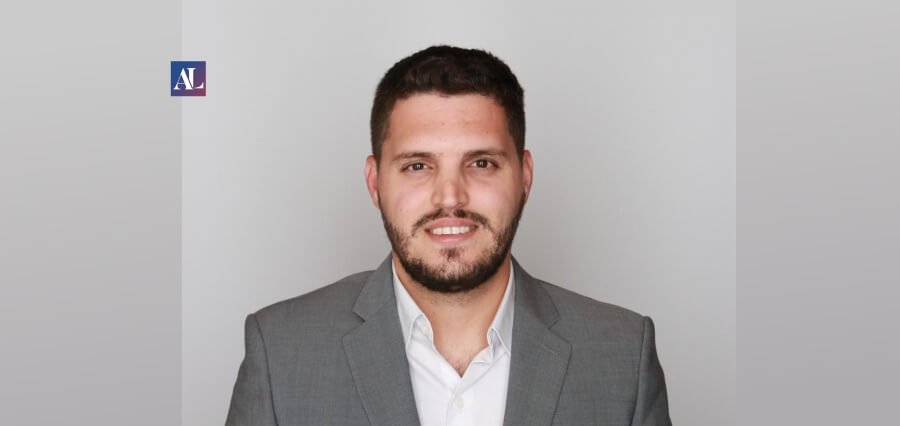
Every problem offers an opportunity to make an impact. The best leaders are the ones who transform complexity into clarity and uncertainty into confidence. Nir Asidan has made his career by helping companies remain resilient in a world where everything becomes interconnected. As a Director of Cybersecurity Consultants at Guardz, Nir works with Managed Service Providers (MSPs) to enhance their capability to defend the countless businesses depending on them daily. His mission is not just cybersecurity technology. It is simplicity, trust, and confidence for the partners.
Nir’s career development is marked by consistent progress due to the factors of service, leadership and learning. Service in the military allowed him to acquire skills such as discipline, resilience and decision-making that still characterize his leadership approach. Physical security and then enterprise technology allowed him to broaden his knowledge of risk management, operational excellence and customer success. All these experiences brought Nir to the sphere of cybersecurity, in which he successfully combines technical knowledge with business acumen to create efficient teams and achieve growth. Based on the people-first approach and his dedication to simplified cybersecurity, he keeps assisting organizations in navigating through a complicated digital environment and mentoring future cybersecurity experts.
Experience-Driven Leadership
Nir did not set out with a clear plan to build a career in cybersecurity. Instead, his journey developed through a series of experiences, with each role preparing him for the next. His career began in the military, where he learned the importance of preparation, disciplined decision-making, and strong leadership. He credits his military service with giving him the ability to perform under pressure, skills that are essential in cybersecurity, where threats change rapidly and decisions often need to be made quickly.
After his military service, Nir joined Bank Leumi, where he worked in physical security. He was responsible for protecting people, facilities, and critical operations. The role demanded precision, accountability, and careful planning. During this time, he recognized that the same principles used to protect physical assets were becoming equally important in securing digital environments.
This realization led him to cybersecurity. At Kaseya, Nir gained valuable insight into how managed service providers (MSPs) operate and the critical role they play in protecting thousands of businesses. He came to understand that effective cybersecurity extends beyond a single organization and requires securing entire networks of businesses that depend on trusted service providers.
His next opportunity came with Guardz, where he brought together his leadership experience, security expertise, and strong understanding of business growth and sales. The role allowed him to help build the company from the ground up. “Looking back, every role prepared me for the next one,” he says.
Building High-Performing Teams
When Nir joined Guardz, there was no established roadmap for building the cybersecurity consulting organization. He took on the challenge of creating it from the ground up. Under his leadership, the organization achieved rapid success. Within the first six months, his team generated more than $1 million in Closed Won Annual Recurring Revenue (ARR) and built a sales pipeline worth more than $6 million. These results reflected the strength of the team’s execution and strategic approach.
Despite these achievements, Nir considers his greatest success to be the people he has helped develop. He takes pride in building a team that enjoys working together, celebrates shared success, and continuously challenges one another to achieve higher standards.
His people-first leadership philosophy shapes the way he measures success. Rather than focusing only on financial results, he values seeing team members grow professionally. Watching someone join the organization with limited experience, develop through mentorship, and eventually become a top performer or leader is, in his view, the most rewarding accomplishment.
Nir also credits each stage of his career for shaping his leadership approach. Bank Leumi taught him discipline and accountability. Kaseya showed him how to build strong customer relationships at scale. Guardz reinforced the power of an aligned, high-performing team working toward a common goal. Together, these experiences have defined his approach to leadership and long-term success.
Simplifying Cybersecurity
Nir believes the biggest challenge in cybersecurity is not that cybercriminals are becoming more sophisticated. Instead, he sees the growing complexity of security operations as the greater concern. According to Nir, many organizations struggle because they rely on too many security tools, receive an overwhelming number of alerts, and lack the resources to manage them effectively. Managed Service Providers (MSPs) face an even greater challenge because they are responsible for protecting hundreds of client organizations at the same time.
Nir challenges the common industry practice of adding another security solution whenever a new threat emerges. He believes this approach increases complexity rather than improving protection. Instead, he advocates for integrated security platforms, intelligent automation, and better visibility into the threats that truly matter.
In his view, the future of cybersecurity belongs to organizations that simplify security operations instead of adding unnecessary layers of technology. By reducing complexity and improving efficiency, businesses can strengthen their security posture while making it easier for teams to respond effectively to evolving cyber threats.
Unified Security Solutions
Nir’s vision is centered on simplifying cybersecurity. He believes Managed Service Providers (MSPs) should not have to rely on multiple disconnected security solutions to protect their customers.
According to Nir, managing separate security tools creates operational gaps, increases complexity, consumes valuable time, and places additional pressure on already stretched teams. He advocates for a unified security platform that integrates identity protection, email security, endpoint security, cloud security, compliance, security awareness training, and Managed Detection and Response (MDR) into a single solution.
Nir emphasizes that every product decision should begin with one simple question: Will this make life easier for our partners? If the answer is yes, the team moves forward with confidence. If the answer is no, the solution should be refined until it better meets customer needs.
This partner-first philosophy has become the foundation of his leadership approach. By prioritizing simplicity, integration, and ease of use, he helps organizations strengthen security, improve operational efficiency, and reduce unnecessary complexity.
Leveraging Artificial Intelligence
Nir believes artificial intelligence is transforming cybersecurity in significant ways. He recognizes that AI presents both challenges and opportunities for the industry.
On one hand, cybercriminals are using AI to make attacks more effective. Phishing emails have become more convincing, social engineering campaigns are more personalized, and cyberattacks can now be launched with greater speed and sophistication than ever before.
At the same time, Nir sees AI as a powerful tool for cyber defenders. AI-driven automation can process large volumes of security alerts, reduce repetitive manual tasks, and help security teams identify and respond to threats more efficiently. This allows cybersecurity professionals to focus their attention on the most critical risks. Nir does not believe AI will replace cybersecurity experts. Instead, he views it as a valuable technology that enhances their capabilities. By improving speed, accuracy, and decision-making, AI enables skilled security professionals to respond more effectively to an increasingly complex threat landscape.
Trust and Accountability
Nir believes effective leadership is founded on honesty, transparent communication, and accountability. He sets clear expectations, empowers individuals with ownership of their responsibilities, provides support when needed, and fosters a culture of accountability by holding every team member responsible for achieving results.
At the center of his leadership philosophy is the principle that managers exist to support their teams. When people are given the right resources, guidance, and trust, they consistently exceed expectations. His approach focuses on empowering individuals while creating an environment where they can succeed.
Building a cybersecurity consulting organization from the ground up was one of the greatest challenges of Nir’s career. Without established processes, he had to recruit the right talent, develop training programs, define key performance indicators, and achieve ambitious business goals simultaneously. He accomplished these objectives while making critical decisions in a rapidly evolving environment.
This experience reinforced an important leadership lesson. Leaders rarely have perfect information when making critical decisions. Instead of waiting for complete certainty, they must make informed decisions, adapt quickly as new information becomes available, and continue moving forward with confidence. This mindset has strengthened his ability to lead effectively in high-pressure situations.
Advice for the Next Generation
Nir encourages aspiring cybersecurity leaders to develop skills that extend beyond technical expertise. He advises professionals not to focus solely on becoming the most technically knowledgeable person in the room. Instead, they should strive to understand how businesses operate, communicate effectively, and lead people with confidence.
According to Nir, cybersecurity should enable business success rather than create unnecessary obstacles. He believes the most effective leaders are those who can balance strong technical knowledge with a clear understanding of business strategy and organizational goals.
Looking ahead, Nir believes the future of cybersecurity leadership will belong to professionals who can combine technology expertise with sound business judgment. He also emphasizes the importance of continuous learning. In an industry that evolves rapidly, staying curious and open to new knowledge is essential. He believes that the moment professionals assume they know everything is the moment they begin to fall behind.