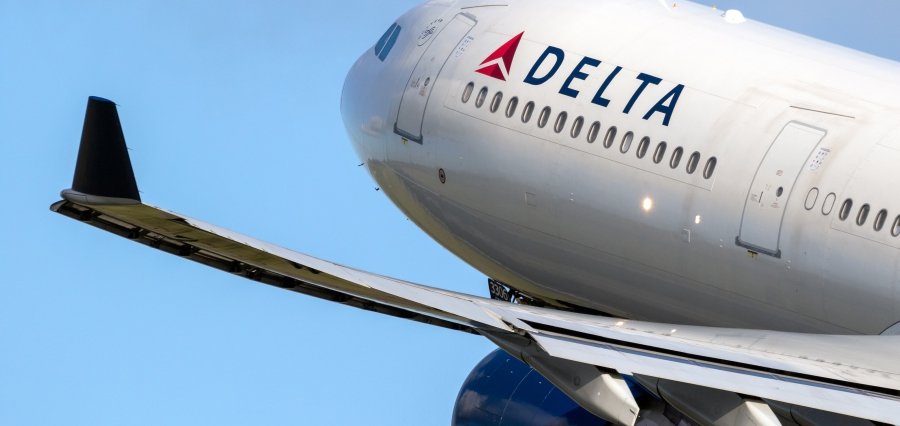
Some airlines move passengers. Delta Air Lines began as a small regional carrier in the American South and today serves millions of travelers across the globe. Its place in global transportation is about more than just flights and timetables. The work that goes on behind the scenes, across its infrastructure, alliances, and day to day operations, is what makes international travel function the way people expect it to. Few carriers have managed to build that kind of presence, and fewer still have maintained it consistently across changing markets and shifting traveler expectations.
A Network That Covers the Globe
The airline connects more than 300 destinations across six continents. Building that kind of network takes time, investment, and a clear sense of where growth is needed and why. Every destination added to the network has a purpose behind it, driven by where travelers actually need to go rather than by a desire to appear large on a route map. The hub system is what holds all of that together and keeps the network running efficiently. Atlanta’s Hartsfield-Jackson Airport handles more passenger traffic than any other airport in the world, and it sits at the heart of the operation.
Flights radiate outward from Atlanta into North America and onward to Europe, Latin America, Asia, and Africa. Supporting hubs in New York, Los Angeles, Seattle, Detroit, Minneapolis, Boston, and Salt Lake City extend that reach further and give the network a depth that few carriers can match. For a business sending teams across borders, or a family keeping ties across continents, that network is not background detail. It is the reason they book with this carrier. Delta Air Lines has built a system that earns its description as the airline that keeps the world moving, not through marketing language but through the practical reality of where its flights go and how reliably they get there.
Getting There on Time, Every Time
Reliability separates good airlines from great ones. Delta Air Lines has built a strong record on the metrics that matter most to travelers: on-time arrivals, completed flights, and bags that show up where they should. That record holds across seasons, across weather events, and across the operational pressures that test every carrier. The investment behind that performance is substantial. Aircraft are maintained to high standards. Staff are trained to handle disruption without passing the cost of it onto passengers. The systems that coordinate scheduling, ground handling, and crew deployment have been refined over many years to reduce the gaps where things go wrong.
Business travelers notice this more than most. When an airline proves itself dependable across dozens of trips throughout the year, it earns a place at the top of the booking list without needing to compete on price alone. Travel managers build it into company policy. Corporate accounts follow. That loyalty, earned through consistent performance rather than promotions or discounts, is one of the most valuable assets the carrier holds in a market where competition is always present and traveler patience is limited.
Partnerships That Extend the Reach
No airline covers the whole world on its own. Delta Air Lines recognized this early and built a partnership strategy that amplifies what its own network can do. As a founding member of the SkyTeam alliance, it operates alongside Air France, KLM, Korean Air, Virgin Atlantic, and other major carriers to give passengers connected service across a combined network that reaches virtually every corner of the globe.
The practical benefits are real and felt at every stage of the journey. Coordinated schedules reduce layover times. Shared lounge access gives frequent travelers consistency across airports in different countries. Loyalty points earned on one airline apply across the alliance, which makes the program more useful for people who travel internationally on a regular basis. For someone flying from a mid-sized American city to a regional European destination, these partnerships mean the journey works as a single smooth experience rather than a collection of separate bookings with different standards and different service levels.
This collaborative approach is part of what defines the airline that keeps the world moving. The connections it enables go beyond flagship routes between major cities. They reach into secondary markets and growing economies where reliable air links are becoming central to business activity and broader economic development.
What the Travel Experience Actually Feels Like
Delta Air Lines has put consistent effort into making the journey itself worthwhile. Long-haul routes offer premium cabin products that compete with the best in the industry. In-flight entertainment and connectivity have improved steadily over recent years, giving passengers more options for how they spend their time in the air. The SkyMiles loyalty program is widely regarded as one of the more rewarding options available to frequent flyers, offering real value that keeps travelers coming back.
On the ground, the Delta Sky Club network gives travelers well-designed spaces at major airports to work, eat, and transition between flights without the stress that airport terminals usually bring. That attention to the experience before and after the flight reflects a broader understanding that travel is tiring, and that an airline that keeps the world moving must also make that movement worth the effort for the people it serves.
Conclusion
The work Delta Air Lines does in global transportation extends beyond the passengers it carries. It supports supply chains that cross borders, connects professional communities that operate internationally, and keeps personal relationships alive across distances that would otherwise be difficult to bridge. For any carrier that wants to be the airline that keeps the world moving, that kind of reach and responsibility go hand in hand. Physical connection between places still matters enormously in ways that video calls and messaging platforms have not replaced and are unlikely to replace anytime soon.
That contribution has been built across decades of steady work, smart investment, and a clear commitment to being the airline that keeps the world moving not just in favorable conditions but consistently, across every route and every season. That is the standard Delta Air Lines has set, and it is the standard that continues to define its place in global transportation.