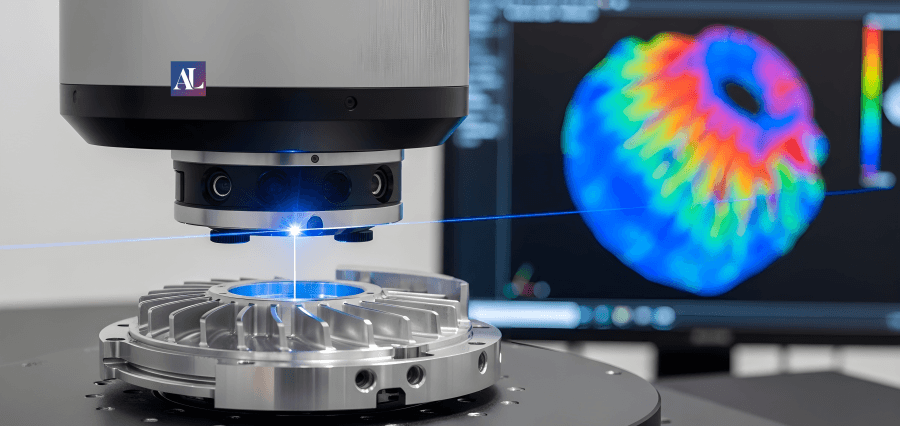
Engineering Precision
Every engineered product in the world, from the smallest medical implant to the largest industrial component, begins with a measurement and ends with one. The entire process of manufacturing, quality control, and product verification depends on the ability to measure accurately and consistently. Without that foundation, nothing else in a production environment can be trusted. This is why metrology equipment and systems sit at the heart of modern engineering, not as a background function but as the discipline that makes precision manufacturing genuinely possible.
The Science Behind Accurate Measurement
The word metrology is not one most people encounter outside technical environments, but its influence touches nearly every product people use daily. At its core, it is the science of measurement, understanding how to measure things accurately, how to verify those measurements are correct, and how to keep measurement systems reliable over time and across different conditions.
Metrology equipment and systems translate that science into practical tools used across manufacturing, aerospace, automotive, electronics and medical device production. These systems range from handheld tools used directly on the production floor to sophisticated machines that map the geometry of complex components with remarkable accuracy. What they all share is a commitment to measurement that can genuinely be trusted, traceable, repeatable, and consistent regardless of who is doing the measuring or where it is happening.
The Critical Factors Behind Measurement Accuracy
It is tempting to think of accurate measurement as simply a matter of having the right tools. The reality is considerably more demanding. Metrology equipment and systems deliver reliable results only when they are properly calibrated, consistently maintained, and used within environments that account for the variables of temperature shifts, vibration, and humidity that quietly influence measurement accuracy.
A measuring system not regularly calibrated against recognized standards drifts over time in ways that may not be immediately visible but accumulate into real measurement errors. In industries where tolerances are measured in micrometers, those errors carry serious consequences. Building a measurement practice that stays trustworthy requires attention to the whole picture: the equipment, the environment, the calibration schedule, and the people interpreting what the numbers actually mean.
Advancing Accuracy through Modern Metrology
Metrology equipment and systems have come a long way from the mechanical gauges and manual instruments that defined quality control in earlier manufacturing generations. Today’s systems draw on optical technology, laser scanning, computed tomography, and advanced sensor arrays to capture measurement data with a speed and completeness that earlier engineers simply could not have achieved practically.
This evolution has not just sharpened accuracy; it has expanded what can realistically be measured. Internal geometries, complex surface profiles, and multi-dimensional relationships between features that were once difficult or time-consuming to assess are now handled with relative efficiency. The range of what precision engineering can verify has grown alongside the sophistication of the tools doing the verifying.
Bringing Measurement into the Production
One of the most meaningful shifts in how metrology equipment and systems get used in modern manufacturing is the move toward integrating measurement directly into production rather than treating it as a final step at the end of a run. Measurement that only happens after production catches problems too late, after material, time, and effort have already gone into components that will not pass specification.
Integrated systems operating within the production environment provide feedback in real time, allowing process adjustments before problems compound into something more costly. That shift from end-of-line inspection toward in-process measurement changes the economics of quality control considerably, cutting scrap, shortening correction cycles, and building quality into the process rather than hunting for it afterward.
Human Expertise Behind Accurate Measurement
Advanced metrology equipment and systems do not reduce the importance of human expertise; they raise what that expertise needs to cover. Operating sophisticated measurement systems correctly, reading results in their proper context, understanding where a particular measurement approach has limitations, and making sound decisions from measurement data all require trained and experienced people behind the process.
As measurement technology advances, the knowledge required to use it well advances alongside it. Organizations that develop genuine measurement expertise alongside their equipment consistently outperform those that treat measurement as a technical function requiring minimal human judgment.
In Summary
In manufacturing environments where quality expectations are high and margins are tight, the ability to measure accurately and efficiently is a real differentiator. When metrology equipment and systems deliver reliable results quickly, quality costs drop, production moves faster and everyone, internal teams and customers alike, can trust what the numbers say.
Organizations that treat measurement as a strategic investment rather than a necessary overhead tend to build manufacturing capabilities that are more consistent, more efficient, and better equipped to meet the increasingly demanding specifications that modern engineering demands. Precision is not just a technical standard; it is a competitive position worth protecting.